China’s medical scooter industry is gaining attention as ageing populations and mobility needs expand. The World Health Organization’s Global Report on Assistive Technology estimates that more than 2.5 billion people need assistive products worldwide. This figure could exceed 3.5 billion by 2050. China is central to this shift. According to China’s National Bureau of Statistics, people aged 60 and above reached 296.97 million in 2023. That represents 21.1% of the population.
Demand is not driven by age alone. Rehabilitation centers, home-care providers, hospitals, and mobility retailers also require dependable equipment. Industry analyses from Grand View Research and IMARC Group identify rising healthcare spending, improved distribution, and product innovation as major market drivers. Their reports also show that market estimates differ because some studies include only powered mobility scooters, while others include related personal mobility devices. This matters when comparing Chinese manufacturers and suppliers.
Quality remains more important than a low quotation. A reliable medical scooter should offer stable steering, predictable braking, comfortable seating, and a battery suited to real travel distances. Imagine a user crossing a hospital corridor, entering a narrow lift, or charging the unit at home. Small design choices become practical safety issues. Supplier evaluation should therefore examine factory experience, quality-control records, product testing, spare-parts access, and after-sales support. Certifications can support credibility, but they do not replace independent verification. China has many capable manufacturers. Not every supplier deserves the same ranking. This guide assesses leading companies through product capability, manufacturing evidence, customization options, export experience, and customer support, while acknowledging that supplier information can change over time.
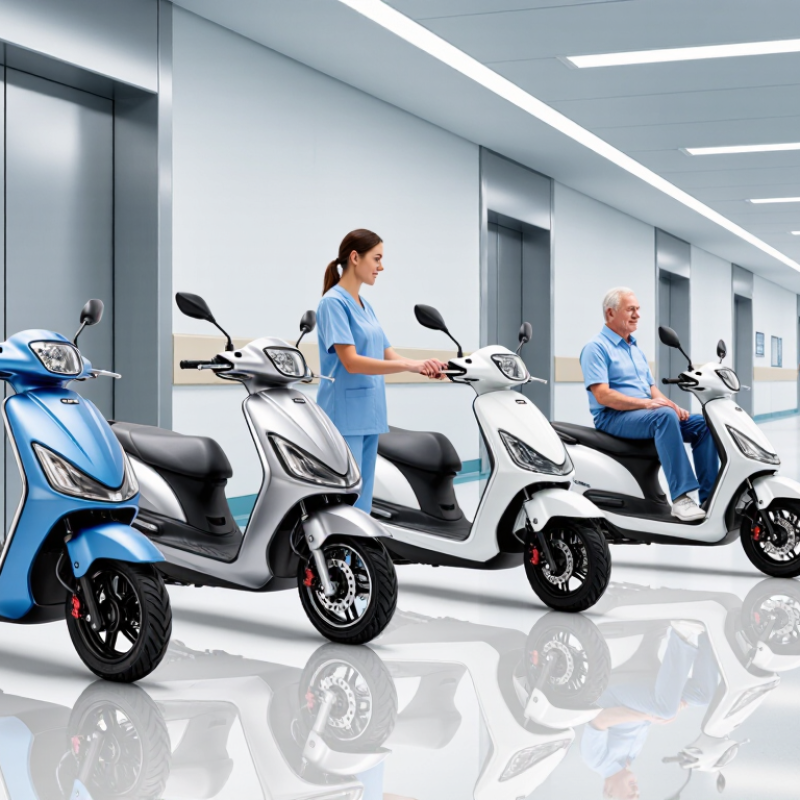
A medical scooter is a battery-powered mobility device designed to help people travel with less physical strain. It usually has a seat, handlebars, three or four wheels, and a rechargeable battery. Unlike a standard wheelchair, it is steered with a tiller and often suits users who can sit upright and transfer independently.
It may help people with arthritis, multiple sclerosis, muscular weakness, balance difficulties, or limited walking endurance. Some users need support only outdoors, while others rely on a scooter inside large buildings.
A scooter is not automatically the right answer. A qualified clinician or mobility specialist should review posture, hand control, vision, transfer ability, and daily routes before purchase.
Small details matter, such as doorway width, turning space, pavement quality, and battery distance.
In practical assessments, comfort often matters more than appearance. The seat should support the hips without pressing the knees. Controls must be reachable without painful stretching.
Portable models can fit a vehicle, but lighter frames may feel less stable on uneven ground.
Larger scooters usually offer better suspension and range, yet they need more storage space.
Measurements and trial use are essential. Online descriptions can be incomplete, and that is easy to underestimate.
Manufacturers and suppliers should provide clear specifications, safety guidance, service support, and realistic battery information. Availability of spare parts also deserves attention. Controls should feel simple. The best choice supports safe, confident movement without creating a new burden.
China’s medical scooter industry is organized as a layered production network. It rarely depends on one factory. A typical supply chain includes frame makers, motor suppliers, battery producers, and control-system specialists. These parts move to assemblers that integrate seats, wheels, steering systems, and safety features. Some factories build complete scooters. Others handle contract production for overseas distributors.
Quality control appears at several checkpoints. Engineers inspect welds, battery compartments, brakes, turning radius, and charger compatibility. Production teams record serial data and test scooters under repeated load conditions. Independent laboratories may verify electrical safety and performance claims. Documentation matters too. Export teams prepare manuals, packing lists, inspection records, and market-specific files. Still, practices vary. A small supplier may have skilled workers but limited testing equipment. That gap deserves careful review.
Distributors and rehabilitation dealers connect manufacturers with hospitals, care centers, and home users. They request adjustable armrests, compact frames, stronger tires, or longer operating ranges. Feedback returns through service teams, spare-parts warehouses, and repair technicians. This loop helps factories revise molds and improve battery access. However, communication can fragment when several subcontractors share one order. Buyers should verify who controls final assembly, inspection, warranty decisions, and replacement parts. A factory visit can reveal more than a polished catalog. Look for labeled workstations, calibrated tools, sample records, and trained inspection staff. Even experienced teams miss details, especially during rushed production changes.
China’s medical scooter sector includes specialized manufacturers, OEM/ODM factories, and rehabilitation equipment suppliers. Each type serves a different purchasing need. Specialized manufacturers usually control frame welding, motor assembly, battery fitting, and final testing. Their products often support more consistent quality control. OEM/ODM factories can adjust colors, seating, controls, and packaging for overseas buyers. However, customization may increase minimum order quantities and delivery time.
Trading suppliers offer wider product selections and faster quotation services. They can connect buyers with several factories, but their technical knowledge may vary. A reliable supplier should provide factory details, product specifications, inspection records, and traceable component information. Ask how they test brakes, steering, battery charging, and load capacity. Small details matter. A loose connector can stop a scooter during daily use.
During supplier audits, buyers should examine welding quality, tire wear, turning radius, and seat adjustment. Request samples before approving large orders. Check whether the sample matches the production agreement. Some suppliers communicate clearly during sales but respond slowly after payment. That is a practical warning sign. Certificates should be verified against the exact model, not merely shown as general files. China’s leading medical scooter suppliers are not always the largest factories. Consistent documentation, responsive engineering support, and realistic delivery promises often matter more. I would also review spare-part availability, because a missing charger or controller can create unnecessary service delays. No supplier is perfect. Careful comparison remains necessary.
Evaluating Chinese medical scooter manufacturers requires more than comparing catalog prices. Start with the factory, not the sales presentation. Ask for the company’s registration details, production capacity, quality procedures, and export experience. A clean showroom helps, but it proves little. Request a live video tour of the assembly line, battery area, testing stations, and finished-goods warehouse. Look for batch labels, inspection records, and controlled storage. These small details reveal whether quality is repeatable.
Review technical documents carefully. They should state the scooter’s load capacity, range conditions, turning radius, braking distance, motor output, charger specifications, and battery protection features. Ask which standards and certifications apply to your destination market. Certificates should match the exact model, not a similar product. Test a production sample on ramps, uneven flooring, and tight indoor corners. Listen for motor noise and check whether the brakes respond evenly. Safety matters most.
Do not rely on one sample alone. Request several units from different production batches when possible. Compare frame alignment, welds, connectors, upholstery, and battery performance. Confirm spare-parts availability, repair instructions, warranty terms, and response times in writing. I have seen attractive quotations hide expensive replacement delays. That risk deserves attention. A manufacturer that accepts technical questions openly is usually easier to manage. Still, promises can change, so record every requirement in a signed specification sheet before placing an order.
Choosing China medical scooter manufacturers requires more than comparing prices and product photos. Buyers should check applicable standards for the destination market, such as ISO 7176 and EN 12184, while confirming the exact test scope. Battery systems may require transport documentation, including UN 38.3 records. Electrical safety, braking distance, stability, electromagnetic compatibility, and charger performance deserve written evidence. Ask for evidence.
Customization can include seat width, armrest design, ground clearance, suspension, controller settings, battery capacity, charger type, colors, labels, and packaging. A practical supplier should explain how each change affects weight, range, safety, and lead time. For example, a larger battery may improve daily travel but increase shipping restrictions and charging time. Some requested features look useful but reduce serviceability. That trade-off is easy to miss.
Export support should cover commercial invoices, packing lists, certificates of origin, multilingual manuals, carton markings, and spare-parts planning. Reliable suppliers normally provide serial-number traceability, inspection records, and clear warranty procedures. Factory audits and sample testing are valuable before large orders. Test the scooter on ramps, uneven pavement, tight turns, and repeated braking. Brochures cannot show every weakness. Even experienced buyers can overlook moisture protection during sea transport or unclear after-sales responsibilities. Confirm who handles defective chargers, damaged cartons, software adjustments, and replacement batteries before signing.
The chart groups relevant ISO 7176 test and information areas commonly reviewed when comparing medical mobility scooters. The values represent the number of ISO 7176 parts included in each evaluation area, not company performance scores. Exporters should also verify destination-specific requirements for lithium batteries, EMC, labeling, technical files, and transport documentation.
El Paso – Main Branch