Choosing medical equipment lift chairs is not simply a matter of comparing colors, prices, or motor counts. The right chair must support safe transfers, comfortable sitting, and realistic daily routines. A buyer should examine the user’s height, weight, leg length, balance, grip strength, and medical needs. A chair that looks excellent online may feel too deep, too narrow, or difficult to control at home.
Occupational therapist Dr. Karen Jacobs offers a useful perspective: “Assistive equipment should fit the person and the task, not force the person to adapt.” That principle belongs at the center of every purchasing decision. Buyers should check whether the lift mechanism raises the user steadily, without sudden movement. The remote should have large, clearly labeled buttons. Emergency lowering options also deserve attention.
Small details matter. Can the user place both feet flat on the floor? Does the footrest support the calves without pressing behind the knees? Is the fabric easy to clean after meals or medical care? These questions often reveal more than a product photograph.
Specifications can mislead.
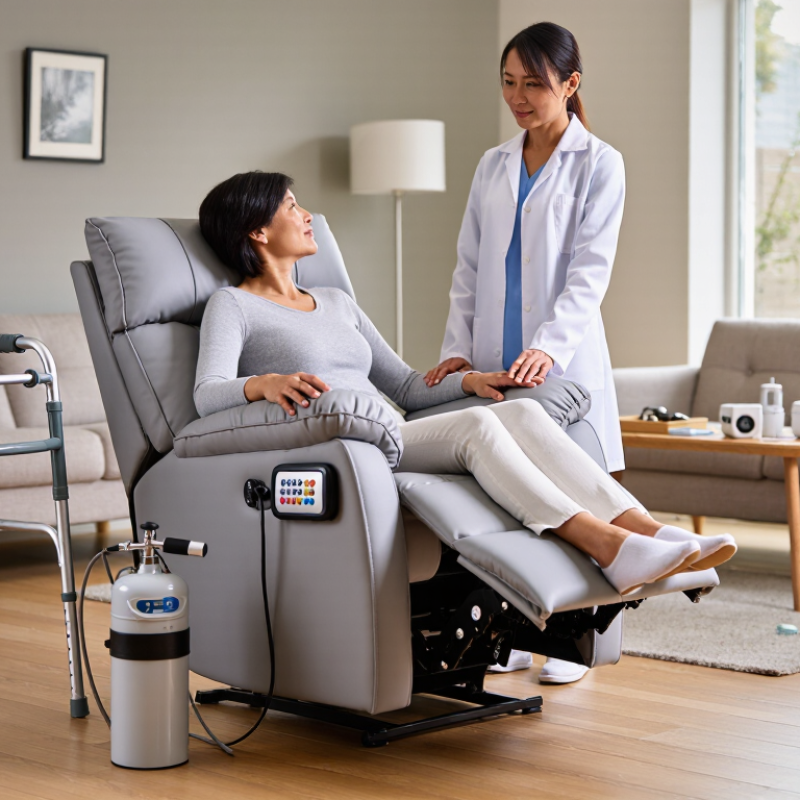
A higher weight capacity does not guarantee better comfort. A cheaper chair may also create replacement costs when its motor, handset, or upholstery fails early. Buyers should request warranty terms, service coverage, delivery access, and professional fitting advice. They should also confirm compatibility with walkers, oxygen equipment, or other assistive devices.
There is no perfect model. My own first impression may be wrong. A careful trial, measured space, and clinician’s input can prevent an expensive mistake. This guide explains how to compare medical equipment lift chairs with greater confidence, safety, and practical judgment.
How to Choose Medical Equipment Lift Chairs for Buyers?
A lift chair should match the user’s daily movements, not only the room’s appearance. Observe how the person sits, stands, rests, and reaches for controls. Some users need gentle elevation because knee or hip movement causes discomfort. Others need extended leg support for afternoon rest. A remote with large, raised buttons can help users with weak vision or limited hand control. Check the lifting motion carefully. It should feel steady, quiet, and predictable. A perfect chair rarely exists, so small compromises may need review.
Tips: Measure the user’s height, hip width, and leg length before buying. Leave clear space around the chair. Test the remote while seated. Ask a healthcare professional whether the chair suits the user’s condition and transfer ability. Check the weight capacity, emergency lowering method, upholstery, and cleaning instructions. Do not rely on appearance alone.
The chair’s position settings also matter. A two-position model may support sitting and basic leg elevation. A multi-position model can offer deeper reclining for rest, reading, or recovery. However, more functions can create confusion. Simple controls are often safer for users who forget instructions. Inspect the footrest gap and side edges, especially when children or pets are nearby. Confirm that the power cable stays away from walking paths. Users may also need caregiver access behind or beside the chair. Test the chair at home if possible, because showroom comfort can be misleading.
| Evaluation Dimension | User Need or Medical Consideration | Recommended Lift Chair Function or Specification | Buyer Checklist |
|---|---|---|---|
| Standing Assistance | The user has reduced leg strength, balance problems, arthritis, or difficulty rising from a seated position. | Power lift function that raises the seat gradually and tilts the user forward without forcing the user to pull on the armrests. | Confirm smooth movement, stable armrests, an easy-to-use handset, and sufficient clearance in front of the chair. |
| Reclining Positions | The user may need upright sitting for meals, partial reclining for reading, or a more horizontal position for rest. | Choose a 2-position, 3-position, or infinite-position mechanism according to the user’s need for posture adjustment. | Check whether the backrest and footrest operate independently and whether the chair can stop safely at intermediate positions. |
| Leg Elevation | The user may experience tired legs, swelling, or discomfort that improves when the legs are supported. | A powered leg rest with adequate calf and heel support; elevation should be used according to professional medical advice when circulation problems are present. | Assess leg-rest length, padding, foot support, and whether the user can lower it independently. |
| Pressure Management | Users with limited mobility may remain seated for extended periods and may be at increased risk of discomfort or pressure injury. | Supportive cushioning, a well-fitted seat, pressure-distributing upholstery, and regular repositioning; a lift chair is not a substitute for a clinical pressure-management program. | Check seat firmness, cushion resilience, seam placement, cleanability, and whether the user can change position safely. |
| Seat Dimensions | Incorrect seat width, depth, or height can reduce stability and make standing or sitting more difficult. | Select dimensions that allow the user’s feet to rest flat, knees to remain comfortably aligned, and the back to contact the backrest. | Measure user height, hip width, lower-leg length, and available room before ordering. |
| Weight Capacity | The chair must safely support the user and any normal clothing or accessories without overloading the lift mechanism. | Choose a model with a manufacturer-rated capacity comfortably above the user’s current weight; capacities differ by model. | Verify the published capacity, frame construction, warranty terms, and whether the capacity applies in every operating position. |
| Control Usability | Users with weak grip, reduced vision, tremors, or cognitive limitations may struggle with small or complex controls. | Use a simple wired handset with large, clearly marked buttons and tactile or high-contrast symbols. | Test button size, cable length, readability, emergency stopping, and handset storage. |
| Transfer Safety | Safe transfers are important for users with balance limitations or a history of falls. | Stable base, firm armrests, suitable seat height, anti-tip design, and a controlled lift cycle. | Look for pinch-point protection, unobstructed movement, non-slip flooring, and adequate space around the chair. |
| Power Failure Protection | A power interruption may leave the chair in a reclined or elevated position. | An optional battery backup or emergency return feature can help complete one or more movements, depending on the design. | Confirm whether backup power is included, how often batteries require replacement, and what movement remains available during an outage. |
| Upholstery and Hygiene | Users with incontinence, wound-care needs, or frequent food and drink exposure may require easier cleaning. | Select durable, low-maintenance upholstery with removable or cleanable surfaces where appropriate. | Review cleaning instructions, fluid resistance claims, seam design, replacement cushion availability, and compatibility with approved disinfectants. |
| Noise and Movement Speed | Users may be sensitive to motor noise or may need slow, predictable movement. | A smooth, controlled motor system with gradual starts and stops is generally preferable. | Operate the chair in person when possible and check noise, vibration, movement smoothness, and stopping accuracy. |
| Room Layout | The chair needs enough space to recline and lift without striking walls, tables, walkers, or caregivers. | Choose a wall-hugger or compact design only when its operating clearance and user dimensions remain suitable. | Measure doorway width, delivery path, wall clearance, reclined depth, and space for mobility aids. |
| Caregiver and Clinical Compatibility | Some users need assistance with transfers, dressing, wound care, or daily repositioning. | Select a configuration that leaves access for caregivers and does not interfere with prescribed transfer equipment or mobility aids. | Consult a qualified healthcare professional or occupational therapist when the user has complex mobility, post-surgical, or pressure-care needs. |
| Maintenance and Service | Regular inspection helps identify worn cables, loose components, unusual sounds, or reduced lifting performance. | Choose a chair with accessible service support, clear user instructions, and replaceable electrical or mechanical components. | Check warranty coverage, service response, spare-part availability, electrical safety guidance, and user maintenance requirements. |
Note: A medical equipment lift chair should be selected according to the user’s size, mobility, transfer ability, home environment, and professional care recommendations. Product capacities, clearances, operating speeds, and backup-power capabilities vary by model.