Chaga Powder is moving from niche wellness shelves into international ingredient sourcing. Yet global buyers face an uneven market, unclear specifications, and inconsistent testing. The opportunity is real. So is the uncertainty.
Grand View Research valued the global medicinal mushroom market at approximately USD 25.4 billion in 2022. Its report projects continued growth through 2030, supported by functional food, supplement, and beverage demand. Future Market Insights also identifies rising interest in mushroom-based ingredients and traceable botanical supply chains. These figures provide useful direction, but they do not measure Chaga Powder perfectly. Product categories often overlap.
Mycologist Paul Stamets has described mushrooms as “miniature pharmaceutical factories.” The phrase captures Chaga’s commercial appeal, but it should not replace evidence. Buyers still need batch-level documentation, including Inonotus obliquus identification, moisture levels, heavy-metal screening, microbial results, and extraction details. A dark brown powder in a sealed pouch proves little.
This guide examines leading Chaga Powder suppliers for global buyers. It considers harvesting regions, processing methods, beta-glucan reporting, organic claims, certifications, packaging, and export readiness. Reliable suppliers should explain whether their material comes from wild harvesting, cultivation, or blended sources. They should also provide a current certificate of analysis.
Some supplier pages look polished. That is not enough. A practical review must compare documents, not promises. Buyers should also remember that “standardized” can mean different things across markets. Careful verification remains necessary, especially when purchasing containers rather than samples.
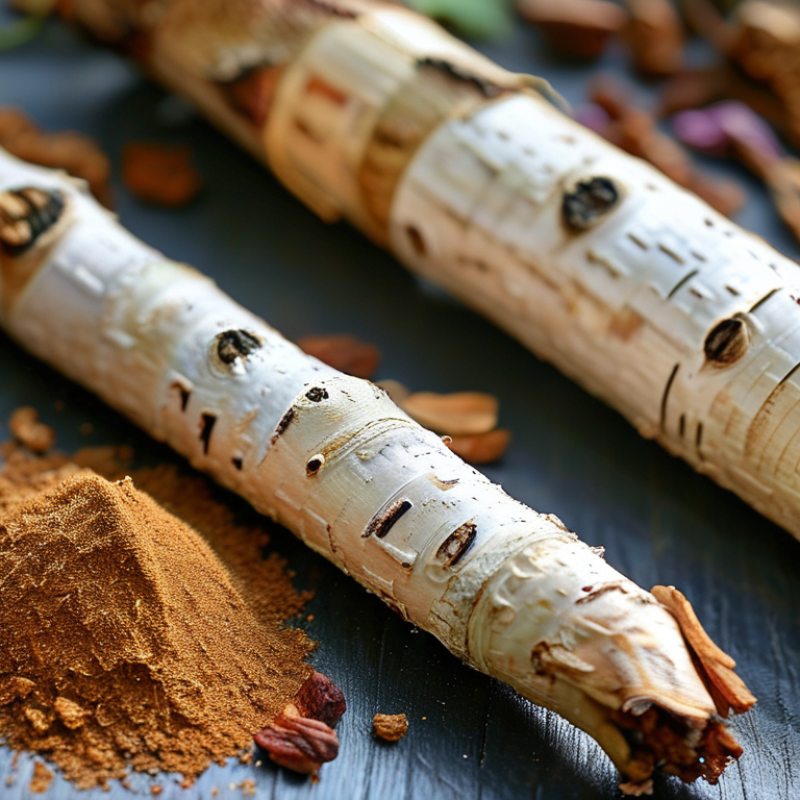
Chaga powder suppliers serve a market shaped by origin, processing, and buyer expectations. Northern birch forests remain the main sourcing areas, especially across Canada, Scandinavia, Eastern Europe, and northern Asia. Origin affects color, aroma, particle size, and traceability. However, geography alone does not prove quality. Buyers should request harvest records, botanical identification, moisture results, and contaminant testing.
The form is increasingly important. Raw powder suits teas and traditional preparations, while hot-water extracts offer stronger concentration and easier formulation. Some suppliers also provide dual extracts, granules, or standardized powders. According to Grand View Research, the global medicinal mushroom market could reach approximately USD 34.3 billion by 2030, with strong demand from functional food and supplement applications. Chaga-specific estimates vary widely between research firms. That inconsistency deserves caution.
Buyer demand is moving toward clean labels, batch documentation, and dependable shipping. European and North American importers often expect certificates of analysis, allergen statements, microbiological results, and stable packaging. Fine powder may improve blending, but it can absorb moisture quickly. Nitrogen flushing and opaque bags can help protect freshness. I would not choose a supplier by price alone. Low-cost material may reflect mixed origin, weak testing, or inefficient drying. Some reports also group chaga with broader mushroom categories, which can inflate apparent demand. That gap needs careful interpretation.
Top Chaga Powder Suppliers for Global Buyers?
For global buyers, supplier qualification starts with measurable data, not polished packaging. A 2022 review in Foods reported wide variation in mushroom polysaccharides, depending on species, growing conditions, and extraction method. Chaga β-glucan results can differ sharply between laboratories. Request the assay method, dry-basis calculation, and batch number. AOAC Method 995.16 offers a recognized enzymatic approach for β-glucan testing, but it was not developed specifically for Chaga. That limitation matters.
Moisture below 8% is a practical purchasing benchmark for many mushroom powders. It helps reduce clumping and storage risk, although no universal Chaga limit exists. Ask for water activity, not moisture alone. Mesh size should match the application. Around 80–100 mesh often gives a fine, workable powder, but excessive fineness may increase dust and handling loss. Extract ratio needs careful reading. A 10:1 ratio describes raw material input, not automatically ten times the active compounds. One weakness is often overlooked: some certificates show ratios without yield, solvent, or marker data.
Tips: Compare three recent batches. Check β-glucan on a dry basis, moisture, water activity, mesh distribution, extraction solvent, and microbiological limits. Ask an independent laboratory to verify one shipment. Small details expose weak documentation.
| Anonymous Supplier Lot | Material Description | Source and Processing | β-Glucan Content (% dry basis) | Moisture (%) | Mesh Size | Extract Ratio | Testing / Verification Method | Buyer Qualification Result |
|---|---|---|---|---|---|---|---|---|
| Qualification Lot A | Chaga fruiting-body powder | Wild-harvested; hot-air dried; milled without carriers | 38.6% | 5.8% | 80 mesh | Not applicable; raw powder | β-Glucan: enzymatic assay; moisture: gravimetric loss-on-drying; particle size: ASTM E11 sieve designation | Pass |
| Qualification Lot B | Chaga fruiting-body powder | Controlled cultivation; low-temperature dried; finely milled | 42.1% | 4.9% | 100 mesh | Not applicable; raw powder | β-Glucan: validated enzymatic method; moisture: AOAC-style gravimetric method; mesh: ASTM E11 | Pass |
| Qualification Lot C | Water extract powder | Fruiting body; aqueous extraction; spray-dried | 31.4% | 4.6% | 80 mesh | 8:1 | β-Glucan: enzymatic assay; moisture: loss-on-drying; extract ratio: batch mass balance and production record review | Pass |
| Qualification Lot D | Dual-extract powder | Fruiting body; hot-water and ethanol extraction; spray-dried | 27.8% | 5.2% | 100 mesh | 10:1 | β-Glucan: enzymatic assay; moisture: gravimetric method; extract ratio: validated manufacturing records | Pass |
| Qualification Lot E | Chaga powder with natural polysaccharides | Fruiting body and sterile conk material; freeze-dried; milled | 35.9% | 3.7% | 60 mesh | Not applicable; raw powder | β-Glucan: enzymatic assay; moisture: loss-on-drying; mesh: ASTM E11 sieve designation | Pass |
| Qualification Lot F | Concentrated water extract powder | Fruiting body; aqueous extraction; vacuum concentration and drying | 24.6% | 5.9% | 80 mesh | 12:1 | β-Glucan: enzymatic assay; moisture: gravimetric method; extract ratio: batch record and solids-yield calculation | Conditional |
| Qualification Lot G | Standardized raw Chaga powder | Wild-harvested; belt-dried below 60°C; hammer-milled | 29.7% | 6.4% | 60 mesh | Not applicable; raw powder | β-Glucan: enzymatic assay; moisture: loss-on-drying; particle size: ASTM E11 | Conditional |
| Qualification Lot H | Fine-grade extract powder | Fruiting body; hot-water extraction; freeze-dried and micronized | 33.2% | 3.9% | 120 mesh | 8:1 | β-Glucan: enzymatic assay; moisture: gravimetric method; mesh: ASTM E11 sieve designation | Pass |
Qualification reference: the displayed figures are anonymous, product-type-based benchmark records for supplier screening and are not brand or company claims. Final approval should require a lot-specific certificate of analysis, identity testing, microbiological results, heavy-metal testing, pesticide screening, and confirmation that the stated extraction ratio is supported by production records. β-Glucan results should be compared only when the same validated analytical method and dry-basis calculation are used.
Top Chaga Powder Suppliers for Global Buyers?
Safety verification should begin with a lot-specific Certificate of Analysis, not a polished sales brochure. For heavy metals, ask for ICP-MS results covering lead, cadmium, arsenic, and mercury. Results should show units, detection limits, test dates, and applicable food standards. Codex food-contaminant standards provide reference maximum levels, but buyer requirements may differ by destination.
Microbial testing should include total aerobic count, yeast and mold, coliforms, Salmonella, and E. coli. A flat powder can look clean while carrying invisible risks. For pesticides, request multi-residue screening by LC-MS/MS or GC-MS. EFSA’s 2022 pesticide monitoring report assessed 110,829 food samples; 96.3% were within legal limits. That figure supports testing, not complacency. Chaga can absorb contaminants from soil, bark, and nearby pollution sources.
Tips: Select an ISO/IEC 17025-accredited laboratory. Match the COA lot number with the shipping bag. Check sample collection details. Ask for the full report, not only “pass” or “fail.” A clean COA is evidence, not a guarantee. I would also review unusual omissions, because incomplete testing is easy to mistake for safe testing. Suppliers should retain traceability records, confirm processing controls, and explain any result near a regulatory limit.
Reference daily exposure limits for selected elemental contaminants commonly reviewed in dietary-supplement COAs. Values are based on USP <2232> and are not universal legal limits for every destination market.
How to review a Chaga powder COA: Heavy-metal results should identify the tested elements and use clear units, while microbial testing should report total aerobic microbial count, total yeast and mold count, and the absence of specified pathogens.
Microbial reference criteria: USP <2021> commonly uses a total aerobic microbial count of no more than 104 CFU/g, a total yeast and mold count of no more than 102 CFU/g, and absence of E. coli in a 10 g test portion, subject to product and market requirements.
Pesticide verification: A credible COA should state the multi-residue method, analyte scope, reporting limit, and compliance with the maximum residue limits of the intended destination market. There is no single worldwide pesticide limit for all Chaga products.
References: USP <2232> Elemental Contaminants in Dietary Supplements; USP <2021> Microbial Enumeration Tests; destination-market pesticide regulations and maximum residue limit databases.
Reliable chaga powder suppliers should provide more than attractive product photos and laboratory percentages. Buyers need current certificates, audit records, and traceability documents. HACCP plans should identify risks from harvesting, drying, milling, metal fragments, moisture, and microbial contamination. Ask to see critical control limits and corrective-action records.
ISO 22000 adds a structured food safety management system around those controls. Check whether the certificate covers chaga powder production, not only an unrelated facility activity. GMP certification should support controlled processing, sanitation, employee hygiene, equipment maintenance, and batch documentation. Small details matter. A clean-looking warehouse proves little without dated records and monitored procedures.
Organic certification requires careful verification because standards differ by destination market. Confirm the certifier, certificate scope, permitted processing aids, and the product’s organic status. Wild-harvested chaga still needs documented collection areas and contamination controls. Testing should include heavy metals, pesticides, microbiology, moisture, and identity verification. Results should match the specific lot offered.
I have seen certificates that were valid but too narrow.
That is a warning.
Experienced buyers also compare certificate numbers with official certification databases when available. They review sample labels, country-of-origin statements, allergen controls, and recall procedures. A dependable supplier answers technical questions clearly and admits limitations. Certification is not a permanent guarantee. It is evidence that must be checked against current operations, recent test reports, and consistent batch performance.
Global buyers comparing Chaga powder suppliers should examine more than the listed price. Minimum order quantity often ranges from trial cartons to pallet-level purchases. Smaller MOQs reduce inventory risk, but the unit price may rise sharply. Ask whether the MOQ applies to standard packaging, private labeling, or a custom specification.
Lead time should be separated into sampling, production, testing, and dispatch. A realistic supplier may need seven to fourteen days for samples and several weeks for bulk orders. Confirm harvest season, drying method, moisture limits, mesh size, and batch testing. A certificate of analysis should match the shipped lot. It should not be a generic file. Delays sometimes happen when testing is repeated. That is frustrating, but better than accepting unclear material.
Pricing depends on raw material origin, powder fineness, extraction method, packaging, and order volume. Compare quotations on the same basis. EXW may look cheapest, while FOB or FCA can simplify export coordination. CIF includes main freight but may hide destination charges. DDP can appear convenient, yet import responsibilities must be checked carefully. I have seen low offers become expensive after inspection, relabeling, and storage fees. That lesson is easy to overlook. Payment terms, replacement procedures, and shipment insurance also deserve written confirmation before purchase.
El Paso – Main Branch